
 Back-to-School Offers
 Laptops
 Desktop computers
 Computer bundles
 Ordenadores All-in-One
 Monitors
 Refurbished mobile phones
 Tablets
 Zone Apple
 Peripherals and Accessories
 Networks and Cables











HDMI
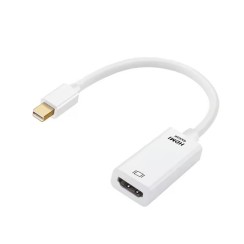
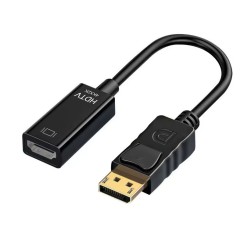
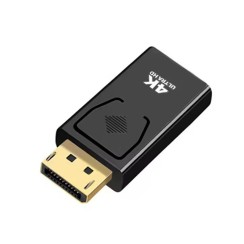
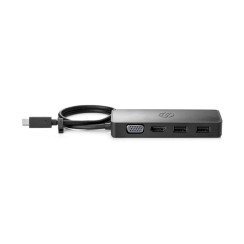
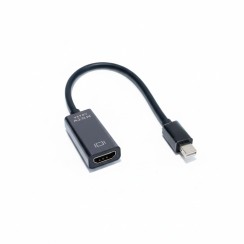
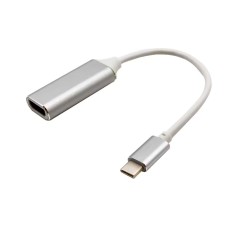
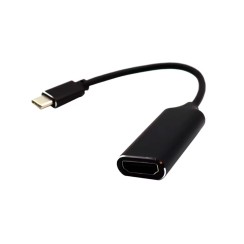
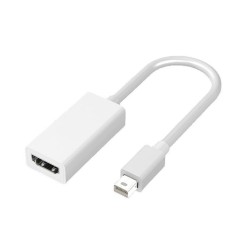
Discover our selection of refurbished HDMI cables , perfect for connecting your devices with quality. We offer cables and adapters, all tested and in excellent condition. Take advantage of this opportunity to get high-end technology at affordable prices. Don't compromise on quality! Enhance your multimedia experience with our refurbished equipment and enjoy exceptional performance.






Frequently asked questions
Not always, but it's increasingly important to get the most out of modern technology, especially if you're a gamer. For most uses, such as watching movies and series on streaming platforms or from a Blu-ray player, a high-speed HDMI cable (certified as 'Premium High Speed'), which corresponds to the HDMI 2.0 standard, is perfectly sufficient for transmitting 4K at 60Hz with HDR . However, an HDMI 2.1 cable (certified as 'Ultra High Speed') becomes essential if you want to access the most advanced features. The main advantage is the greater bandwidth, which allows for:
- 4K gaming at 120Hz: This is the standout feature. If you have a PlayStation 5, Xbox Series X, or a powerful gaming PC , a 2.1 cable is essential to enjoy the maximum smoothness and resolution that these consoles and graphics cards offer.
- Advanced gaming features: Enables technologies such as Variable Refresh Rate (VRR), which synchronizes game frames with the screen to eliminate screen tearing, and Auto Low Latency Mode (ALLM).
- Future-proofing: Although 8K content is still scarce, a 2.1 cable ensures you're ready for when it becomes popular.
In short, if your primary use is for movies and TV shows, a good HDMI 2.0 cable is sufficient. If you're a gamer or want the best technology available, buying an HDMI 2.1 cable is the right investment.
In the vast majority of cases for home use, no, it's not worth spending a fortune on cables with flashy marketing. The reason is simple: the HDMI signal is digital. This means the signal either arrives perfectly or it doesn't arrive at all (which manifests as colored pixels, digital 'snow,' or image interruptions). There is no 'better image quality' or 'more vibrant colors' from using a more expensive cable over short distances (less than 5 meters). The famous 'gold plating' on the connectors primarily serves as corrosion resistance, something irrelevant in the dry environment of a living room or office. What really matters, and what you should look for when buying an HDMI cable, is not the exotic materials, but the official certification that guarantees its bandwidth . Look for the labels:
- 'Premium High Speed' to ensure compatibility with 4K at 60Hz (HDMI 2.0).
- 'Ultra High Speed' to ensure compatibility with 4K at 120Hz and 8K (HDMI 2.1).
A certified, affordable cable will give you the exact same performance as a premium one costing ten times as much. The price of an HDMI cable should reflect its certification and length, not marketing promises of superior picture quality that are digitally impossible.
Yes, long HDMI cables, especially traditional passive copper ones, can suffer signal degradation . This phenomenon is known as attenuation, and it occurs because the digital electrical signal weakens as it travels along the cable. The higher the resolution and refresh rate (i.e., the more bandwidth required), the more susceptible the signal will be to this degradation. The symptoms of an excessively long cable are clear: flickering pixels ('sparkles'), intermittent image and sound cutouts, or even a complete lack of signal. As a general rule for an HDMI cable for a monitor or TV:
- Up to 5 meters: This is considered a safe distance for most resolutions, including 4K HDMI cable at 60Hz.
- Between 5 and 10 meters: This is where the risk zone begins. The cable quality and its shielding become crucial. It might work fine, but the risk of problems increases.
- Over 10 meters: A standard passive copper cable is very unlikely to work reliably with high-resolution signals.
For long distances, the solution is to use an active HDMI cable (which includes a chip to amplify the signal) or, for the most extreme distances (15 meters or more), a fiber optic HDMI cable . The latter transmits the signal as light pulses and is immune to degradation and electromagnetic interference, although it is more expensive.
Related
Reviews from our users
Top sellers HDMI